Eat
Balinese sweets in Ubud: taste them at the market, make them in a kitchen
Roll the sweet yourself
IDR 530.000promo · per guest
Where to find jaja Bali around Ubud — dawn market trays and the Gianyar night market — and where to roll dadar gulung yourself in a Petulu kitchen.
By Chef Wayan Suryana, Warung Tumang BaliLast updated
The short answer
Balinese sweets, called jaja, are easiest to find on dawn trays at the Ubud morning market and at the Gianyar night market after dark, where klepon and laklak are common. To make one yourself, the Petulu cooking class with Chef Wayan usually ends with dadar gulung, pandan crepes rolled around coconut and palm sugar, which guests roll by hand.
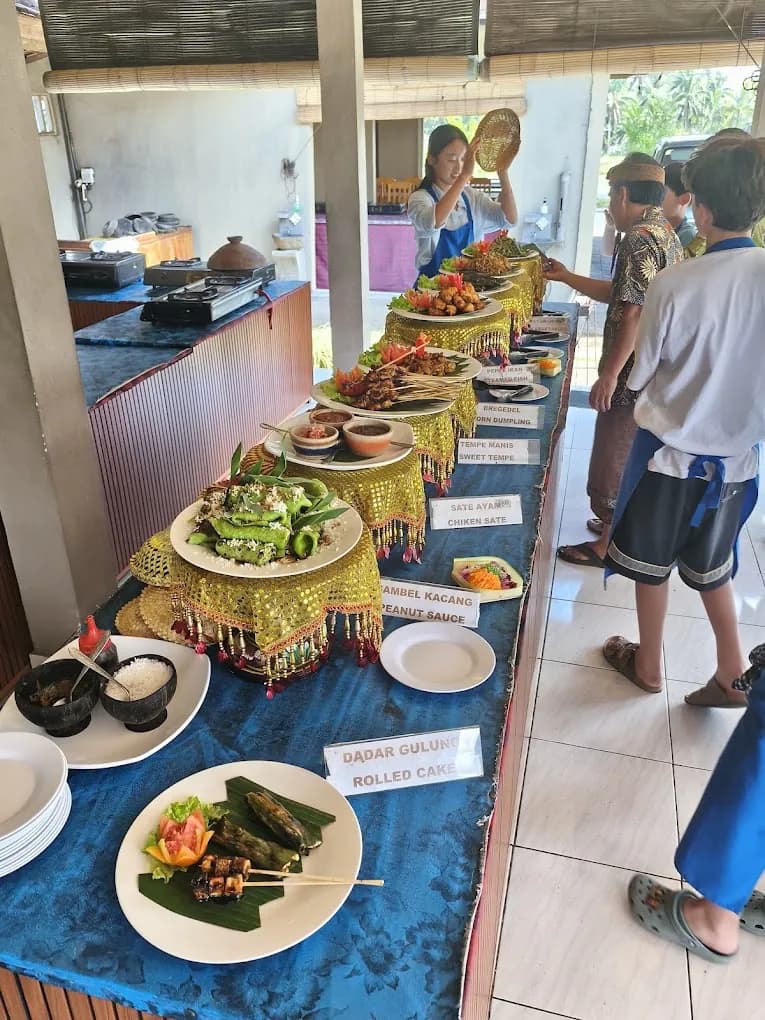
What jaja Bali are
Jaja is the Balinese word for small sweets and cakes. Most come from the same few ingredients: rice flour or sticky rice, grated coconut, palm sugar, and pandan for the green color and the scent. Balinese eat them with morning coffee, buy them from market trays, and place them in offerings.
Three you are likely to meet around Ubud: klepon, green rice balls that burst with melted palm sugar; dadar gulung, pandan crepes rolled around sweet coconut; and bubur injin, black rice pudding served warm with coconut milk.
Taste them at the market at dawn
The sweet trays at the Ubud morning market sell out early, like everything else there. Go just after dawn, buy a few pieces, and eat them on the walk. By mid-morning the trays have been picked over.
After dark, the Gianyar night market is where Balinese families eat, 25 to 35 minutes east of Ubud. Look for klepon or laklak at the cake stalls after your babi guling.
Make one yourself in Petulu
Tasting takes a minute; making one shows you why they are hard to get right. In the cooking class at Warung Tumang Bali, about 10 minutes from central Ubud, dadar gulung is usually the sweet that finishes the meal. You swirl the pandan crepes thin, cook the coconut in palm sugar until it is moist but not wet, and roll them yourself.
It is a full cooking class, not a dessert-only lesson: the spice paste and the savory dishes come first, and the crepes close the board at lunch after the 8:30am session or at dinner after the 2:30pm session. If the sweet is why you are booking, say so when you check dates. Cook Balinese explains how to learn to make dadar gulung in Bali, step by step.
Take the recipes home
Cook Balinese has written recipes for dadar gulung and for klepon, with market palm sugar and fresh pandan or pandan paste. Buy a block of dark palm sugar at the market before you fly; it is the flavor most home versions miss.
Questions before the day
- What are Balinese sweets called?
- Jaja, or jaja Bali: small cakes and sweets made from rice flour or sticky rice, coconut, palm sugar, and pandan. Klepon and dadar gulung are two of the best known.
- Where can I try klepon in Ubud?
- On the sweet trays at the Ubud morning market just after dawn, and at the cake stalls of the Gianyar night market after dark.
- Can I make Balinese desserts in a cooking class near Ubud?
- Yes. The Petulu class usually ends with dadar gulung that guests roll themselves. It is a full meal class, not dessert-only; say the sweet matters when you check dates.
Plan the rest of the day
- The Ubud morning market, before the heatWhen to walk a working Ubud morning market: just after dawn, chili and coconut still piled, then leave. How the Petulu class uses those stalls, not souvenirs.
- The Gianyar night market from UbudGianyar night market (Pasar Senggol) is 25–35 minutes from Ubud. Arrive around 6pm for babi guling, sate lilit, lawar, and klepon. Bring small cash notes.
- When to eat on a Petulu food dayWhere the meal sits on a Petulu food day near Ubud: lunch after the 8:30am morning, dinner after the 2:30pm session, green crepes to finish, no second meal.
Cook the dishes from this day
- Dadar gulungHow to make dadar gulung: thin green pandan crepes rolled around grated coconut cooked with palm sugar. Eight rolls, 45 minutes, from a Petulu kitchen.
- KleponHow to make klepon: pandan glutinous rice balls filled with palm sugar that melts as they boil, then rolled in coconut. About 20 balls in 35 minutes, from Bali.
Where the kitchen is
Chef Wayan Suryana at Warung Tumang Bali, Banjar Laplapan, Petulu, Ubud, Gianyar, Bali 80571. The kitchen is about 10 minutes from central Ubud, depending on traffic. Pin -8.4945671, 115.2812928.