
Spice table
How to read a Balinese spice table
What is in the bowls before anyone cooks: chili, turmeric, coconut, candleut, banana leaf, and the difference between raw base genep and the fried paste.
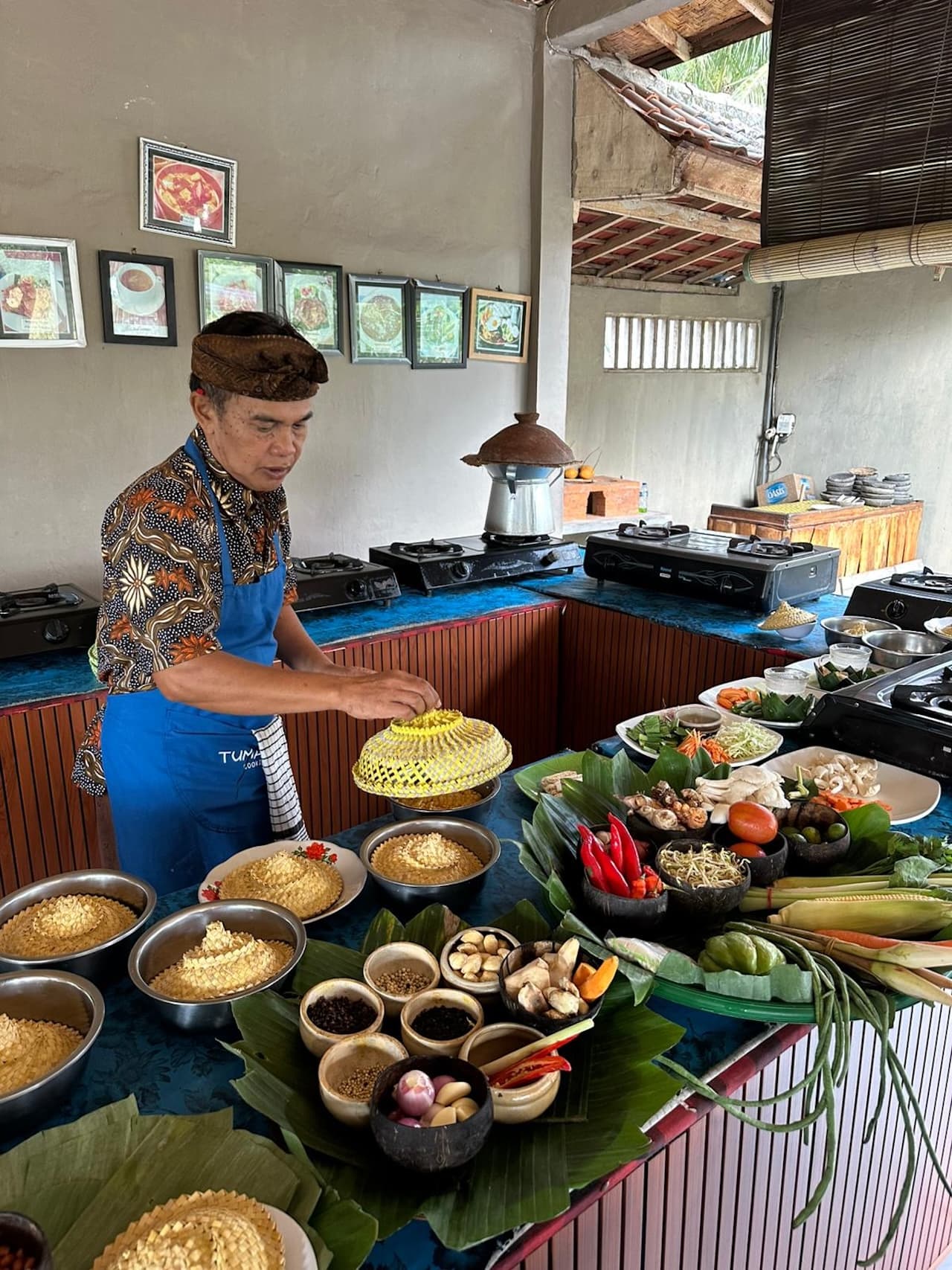
The bowls are the recipe
Before the wok is lit, the table holds the day in small bowls: red chili, shallot and garlic, turmeric and other roots, grated coconut, lime leaves, and a stack of banana leaf. If you can name those, you can follow the cooking.
Base genep is the raw mix of those roots and aromatics. It is fried in coconut oil before it seasons food. Candlenut in that mix is cooked with the paste. Do not eat the raw grind.
What changes for a plant-based table
Shrimp paste is the ingredient that drops out. Coconut, chili, turmeric, galangal, and lime leaf stay. Tofu and tempeh take the place of fish in pepes and sate. The bowls look almost the same, which is why the vegetarian menu can be cooked in the same kitchen on the same morning.
Say it when you book. The shopping at the market changes, and the paste is ground without terasi.
At this kitchen
The table in the photograph is the class table at Warung Tumang Bali. Chef Wayan Suryana teaches the paste in English, with at most eight guests. You use your hands. A booklet goes home with the written versions.
The warung is in Petulu, about 10 minutes from central Ubud, depending on traffic. One kitchen, one pin on the map.